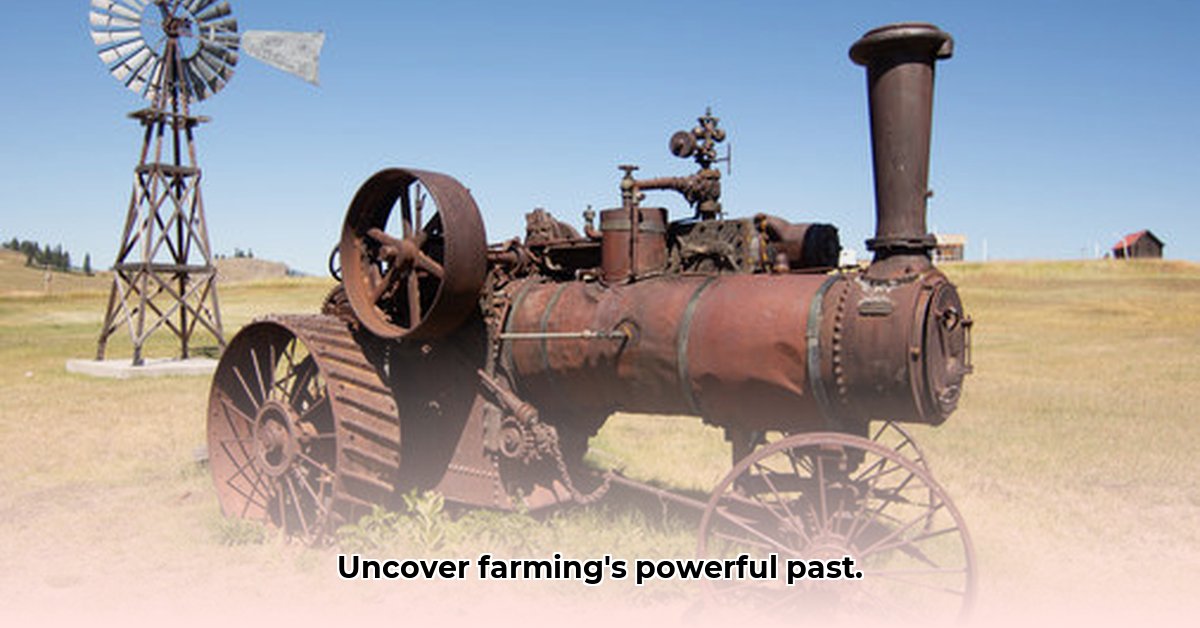
Imagine a time before the roar of internal combustion engines dominated the agricultural landscape. Picture instead the rhythmic chugging of a behemoth, a steam tractor, its powerful pistons driving plows across vast fields, transforming farming forever. These magnificent machines weren't just tools; they were symbols of human ingenuity and the relentless pursuit of progress. This article explores their mechanics, their profound impact on agriculture, their eventual decline, and their enduring legacy. For more information on steam tractor models, check out this resource.
The Mechanics of Mighty Machines
Steam tractors harnessed the power of steam, generated by burning coal in a high-pressure boiler (a large, pressure-resistant container for generating steam). This steam drove pistons, translating the intense heat into immense pulling power (often exceeding that of multiple draft animals). Their strength allowed farmers to cultivate previously untamable acreage, revolutionizing the scale of agricultural operations.
However, this power came at a cost. These weren't simple machines; they were complex pieces of engineering demanding regular, skilled maintenance. Water consumption was staggering—some models consumed up to 340 gallons per hour! The high-pressure boilers presented significant safety risks, requiring knowledgeable and cautious operators. The complex machinery and the infrequent availability of spare parts further challenged their smooth operation.
Shaping the Agricultural Landscape: A Historical Journey
The advent of steam tractors marked a societal shift. Before their arrival, farming was primarily backbreaking manual labor, severely limiting the scale of operations. These behemoths dramatically increased arable land, leading to higher yields and greater efficiency. Envision the vast prairies of North America or the rolling fields of Europe—transformed by the tireless work of these mechanical giants.
This technological leap also reshaped the agricultural workforce. Skilled operators and mechanics were in high demand, creating new employment opportunities and specialized expertise. The high initial cost of steam tractors spurred innovative collaborations, such as threshing rings, where farmers shared machinery and labor, fostering community and mutual support. However, adoption wasn't uniform. Challenging terrain and heavy rainfall in regions like parts of Britain hindered their practicality, although successful adaptations were made across varied locations.
The Slow Fade of Steam Power: A New Era Dawns
Despite their transformative impact, the dominance of steam tractors was short-lived. The rise of the internal combustion engine (ICE) presented a more efficient and practical alternative. ICEs were lighter, required less fuel and maintenance, and were simpler to operate, ultimately proving more adaptable to diverse farming conditions. This transition wasn't abrupt; it was a gradual process influenced by economic factors, improvements in road infrastructure (facilitating easier transportation of machinery), and the ongoing refinement of the ICE itself.
A Lasting Legacy: More Than Just Rusting Metal
While largely absent from modern farms, the impact of steam tractors endures. They fundamentally advanced agricultural practices, influencing subsequent technological innovations, and continue to capture our imagination. Museums carefully preserve and restore these impressive machines, keeping their stories—and invaluable lessons in mechanical engineering and agricultural history—alive. Their legacy encompasses more than just their historical significance; their design principles and the engineering challenges they overcame remain relevant to modern engineering challenges.
"The enduring legacy of steam tractors goes beyond their historical significance; they serve as a reminder of the ingenuity and determination that defines human progress in agriculture," says Dr. Emily Carter, Agricultural Historian at the Smithsonian National Museum of American History.
Acting Now: Preserving the Past for the Future
Preserving these relics of agricultural history is crucial. Further research into regional variations in adoption rates and their economic impact would significantly enrich our understanding. Museums must strive for more engaging and interactive displays that fully capture the ingenuity and relentless spirit that powered these remarkable machines. Continued restoration and preservation efforts are vital to ensure that future generations can appreciate these pivotal machines.
The preservation of steam tractors isn't merely a matter of nostalgia; it is an investment in understanding our agricultural past and appreciating the human ingenuity that drives progress. Their story is our story—a narrative of innovation, community, and the enduring drive to improve the world around us.